
El Paso County Dissolution Records Access
El Paso County divorce records are maintained at the 4th Judicial District Court in Colorado Springs. This is the most populous county outside the Denver metro area. The court handles thousands of domestic relations cases yearly. Records are public under Colorado law. Access is available online and in person. The clerk follows Chief Justice Directive 05-01 for public access.
El Paso County Quick Facts
El Paso County District Court Location
The 4th Judicial District Court sits in downtown Colorado Springs. The Robert M. Isaac Justice Center houses the court. This modern facility opened in 2010. It consolidated court operations. All El Paso County divorce records are here. The clerk's office is on the main floor. Staff process thousands of requests yearly.
The courthouse is near the city center. It is accessible by public transit. Parking is available nearby. Some spaces require payment. The building is large. Signage directs visitors. The records office opens early. It closes in the afternoon. Peak times see longer waits. Visit mid-morning for shorter lines. Records requests take time. Complex searches need preparation.
| El Paso County District Court |
270 S Tejon Street Colorado Springs, CO 80903 Phone: (719) 452-5000 |
|---|---|
| Hours | Monday through Friday, 7:30 AM to 4:30 PM |
| Records Office | First floor, Room 100 |
| Building | Robert M. Isaac Justice Center |
How to Search El Paso County Divorce Records
Finding divorce records in El Paso County is straightforward. Multiple options exist. Online searches are fastest. In-person visits provide documents. Mail requests work for remote access. This section explains all methods. Choose what works for you.
The Colorado docket search covers El Paso County. It is free. Visit coloradojudicial.gov/dockets. Select El Paso County. Choose "DR" for domestic relations. Enter your search terms. Party names work. Case numbers work too. Date ranges help narrow results. The system displays case events. Filing dates show. Hearings appear. Documents are not viewable. Order those separately.
For document copies, visit the courthouse. Bring identification. Provide case details. The clerk will assist. Standard copies cost $0.25 per page. Certified copies are $20 each. Payment is accepted multiple ways. Cash works. Checks are accepted. Credit cards may be used. Call to confirm current policies. Large requests take time. Staff may ask you to return. Or they can mail documents.
Online record requests are available. Use the Judicial Branch form. Visit coloradojudicial.gov/recorddocument-request-form. Complete all fields. Submit your request. A clerk will contact you. They provide cost estimates. Pay by phone or mail. Documents are sent to you. Processing takes three business days. El Paso County's volume may add time.
El Paso County Divorce Filing Fees
El Paso County follows state fee schedules. The legislature sets these rates. They apply uniformly. All Colorado courts charge the same. C.R.S. § 13-32-101 lists the fees. The clerk collects them. No discounts exist for volume.
The fee schedule includes:
- Petition for dissolution: $260
- Response to petition: $146
- Motion to modify decree: $105
- Motion to enforce: $105
- Certified copy: $20 per document
- Plain copies: $0.25 per page
Fee waivers are available. Apply if you qualify. File a motion to waive. Show financial hardship. Include supporting documents. Tax returns help. Pay stubs work. Public benefit letters help. The judge reviews requests. Some fees are mandatory. Waivers apply only to discretionary costs. The clerk provides forms.
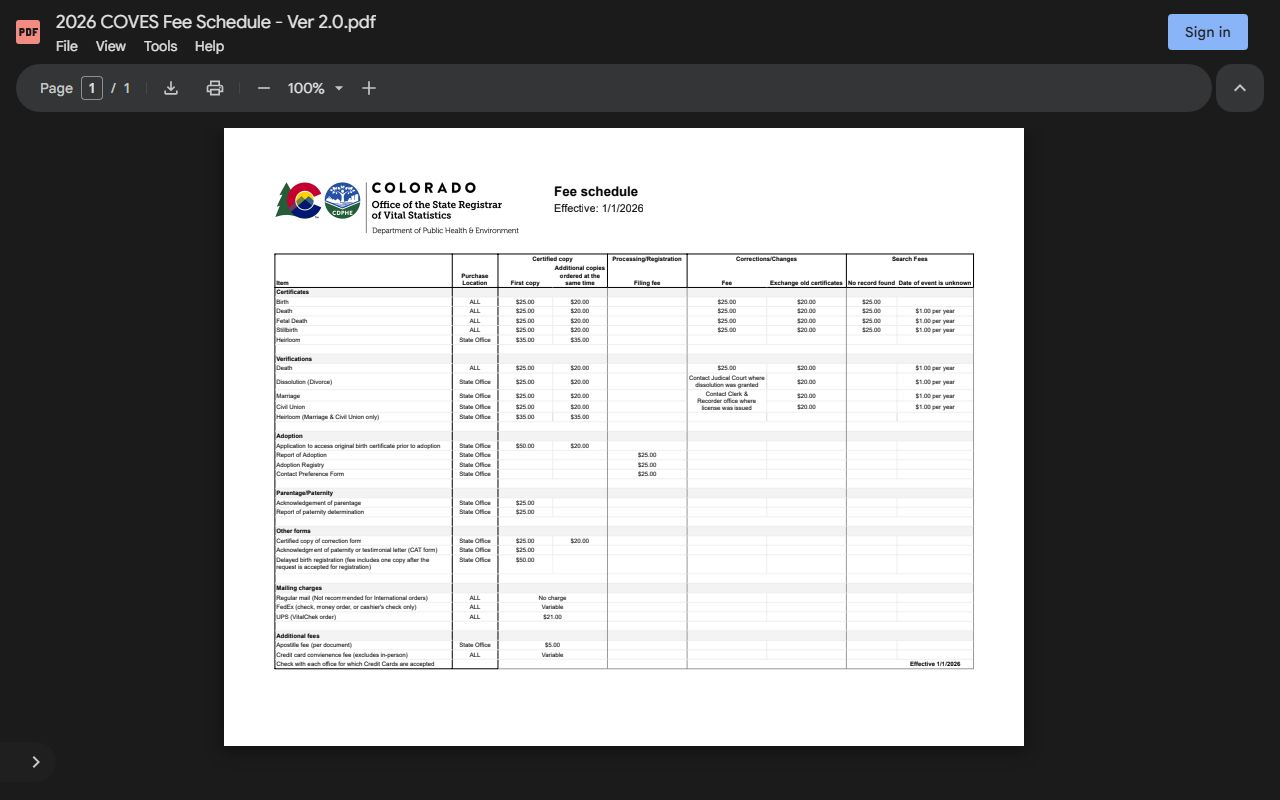
E-filing is widely used in El Paso County. Attorneys must use it. Self-represented parties may use it. Create an account at the Colorado Courts E-Filing portal. Pay the $12 service fee per filing. This is separate from court costs. E-filing is convenient. It saves trips downtown. Documents are time-stamped instantly. The clerk reviews and accepts them. You receive email confirmation. Opt-in to see your case status online.
El Paso County Residency Requirements
Residency rules govern El Paso County filings. C.R.S. § 14-10-106 sets the requirements. One spouse must live in Colorado for 91 days. To file in El Paso County, you or your spouse must reside there. This determines proper venue. Filing in the wrong court wastes time and money.
El Paso County includes Colorado Springs. It also includes smaller communities. Fountain is to the south. Monument is to the north. All are in the county. Residents from all areas file here. The court serves the entire county. Military members have special considerations. Fort Carson sits in the county. Peterson Air Force Base is here. Service members may claim Colorado residency. Or they may keep another state. Consult legal assistance. They can clarify jurisdiction.
Children need 182 days in Colorado. This is for custody decisions. The court must have jurisdiction. This protects children. It prevents parental kidnapping. It stops forum shopping. If children are new to Colorado, custody waits. The divorce can proceed. Property can be divided. But custody orders need the full 182 days. Plan your case strategy accordingly.
Note: Military families should check with legal assistance on base. Special rules may apply to service members.
El Paso County Divorce Timeline
All Colorado divorces require a waiting period. El Paso County follows this rule. The period is 91 days. It is a minimum. The court cannot act faster. This time starts when jurisdiction is established. For joint filings, it is the filing date. For single filings, it is when service occurs.
The waiting period serves several purposes. It allows for reflection. Reconciliation is possible. It also permits negotiation. Many cases settle. This saves court time. It saves party expense. Use the 91 days productively. Gather financial documents. Discuss settlement options. Consult with attorneys. Prepare for co-parenting.
After 91 days, the court can finalize. If you have an agreement, submit it. The court reviews for fairness. If approved, the decree is signed. This ends the marriage. If no agreement, schedule a hearing. The judge decides disputes. El Paso County has many cases. Court calendars are busy. Settlement is usually faster. Consider mediation. The court offers resources.
El Paso County Divorce Record Types
Divorce files contain many documents. Each serves a function. Together they record the case. Most are public records. Anyone can request them. Some parts are confidential. This section describes typical contents. Know what to expect.
The petition begins the case. It identifies the parties. It states the grounds. Colorado is no-fault. The marriage is irretrievably broken. No other grounds are needed. The petition requests relief. Property division may be sought. Support may be requested. Custody may be included. The answer responds. It admits or denies allegations. It may make counter-requests.
Financial disclosures are mandatory. Both parties must file. They list all assets. They list all debts. Income is documented. Expenses are detailed. This ensures fair division. It supports accurate support orders. Parenting plans address children. They propose custody schedules. Decision-making is outlined. Holiday arrangements are included. Support worksheets calculate amounts. They apply state guidelines. The final decree ends the case. It approves agreements. It orders division. It establishes support. It addresses custody. The decree is enforceable. Keep certified copies. You will need them.
Legal Resources in El Paso County
El Paso County offers many legal resources. It is a large metro area. Services are more available than rural counties. Some are free. Others charge fees. This section lists options. Contact them for current details.
Colorado Legal Services has an office in Colorado Springs. They serve low-income residents. Call (719) 471-0380. Apply for assistance. Services are limited. Priority goes to urgent needs. Domestic violence cases get attention. Custody emergencies qualify. Senior citizens receive help. Call to learn if you qualify. They cannot help everyone. Income limits apply.
The El Paso County Bar Association provides referrals. Call (719) 520-7590. They connect you with family lawyers. Initial consultations are available. Fees vary by attorney. Ask about flat rates. Some offer payment plans. Military families have additional resources. Fort Carson Legal Assistance helps service members. Peterson Space Force Base also offers services. Check with your command.
Self-help resources are abundant. The court website provides forms. Instructions are detailed. Visit coloradojudicial.gov/self-help. The El Paso County Law Library is downtown. It is near the courthouse. Staff can find resources. They cannot give legal advice. Consider mediation. The court offers programs. Mediation helps settlements. It is often cheaper than trial. It is usually faster too.
Cities in El Paso County
El Paso County includes several cities. All file divorce cases at the Colorado Springs District Court. The venue is the same throughout the county.
Other communities include Manitou Springs, Black Forest, Peyton, and Calhan. All residents file divorce cases at the El Paso County District Court in Colorado Springs.
Nearby Counties
These counties border El Paso County. Verify proper filing venue if you live near county lines. You must file where a party resides.