
Find Colorado Divorce Records
Colorado divorce records are kept by two different state systems. District Courts in each of the 64 counties maintain full case files with all divorce documents. The Colorado Department of Public Health and Environment keeps divorce verifications that show basic facts about each divorce. You can search these records online, by mail, or in person. Many people need these papers for legal matters, name changes, or remarriage. This guide shows you how to find the divorce records you need in Colorado.
Colorado Divorce Records Quick Facts
Where to Find Colorado Divorce Records
There are two main places to get divorce records in Colorado. District Courts hold the full case files for every divorce filed in the state. These files include the petition for divorce, the response from the other spouse, settlement agreements, and the final decree signed by the judge. The Clerk of District Court in each county keeps these records and can provide copies to you. You can visit the courthouse in person or search some records through the state's online systems.
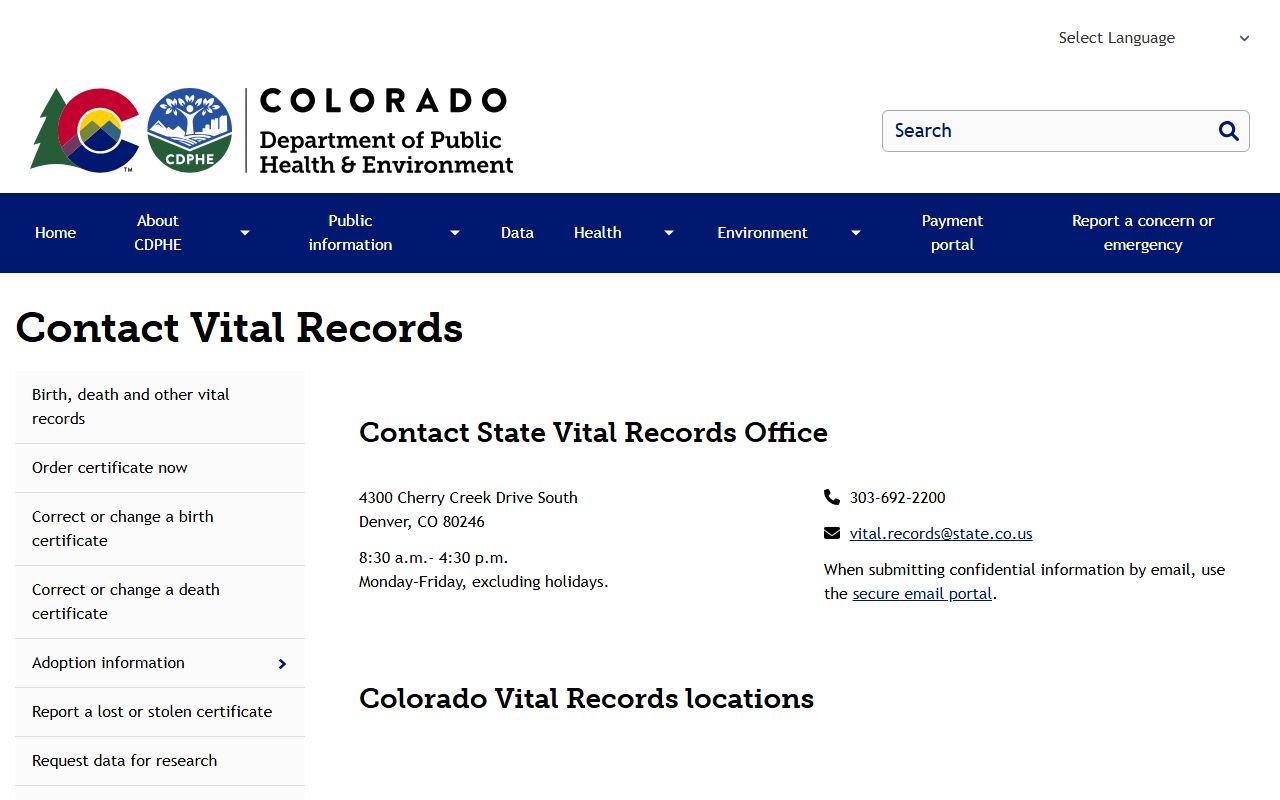
The Colorado Department of Public Health and Environment maintains divorce verifications. A verification is not the same as a full court record. It shows only basic facts: the names of both spouses, the date of the divorce, and the county where it took place. The health department provides verifications rather than certified copies. You can order these by mail or through their online partners. The fee for a divorce index verification is $17. This is established under federal vital records guidelines for Colorado.
Colorado treats vital statistics records as confidential under C.R.S. § 25-2-117. This means only people with a direct and tangible interest can obtain copies. You may need to show proof of your relationship to the parties or legal interest in the record.
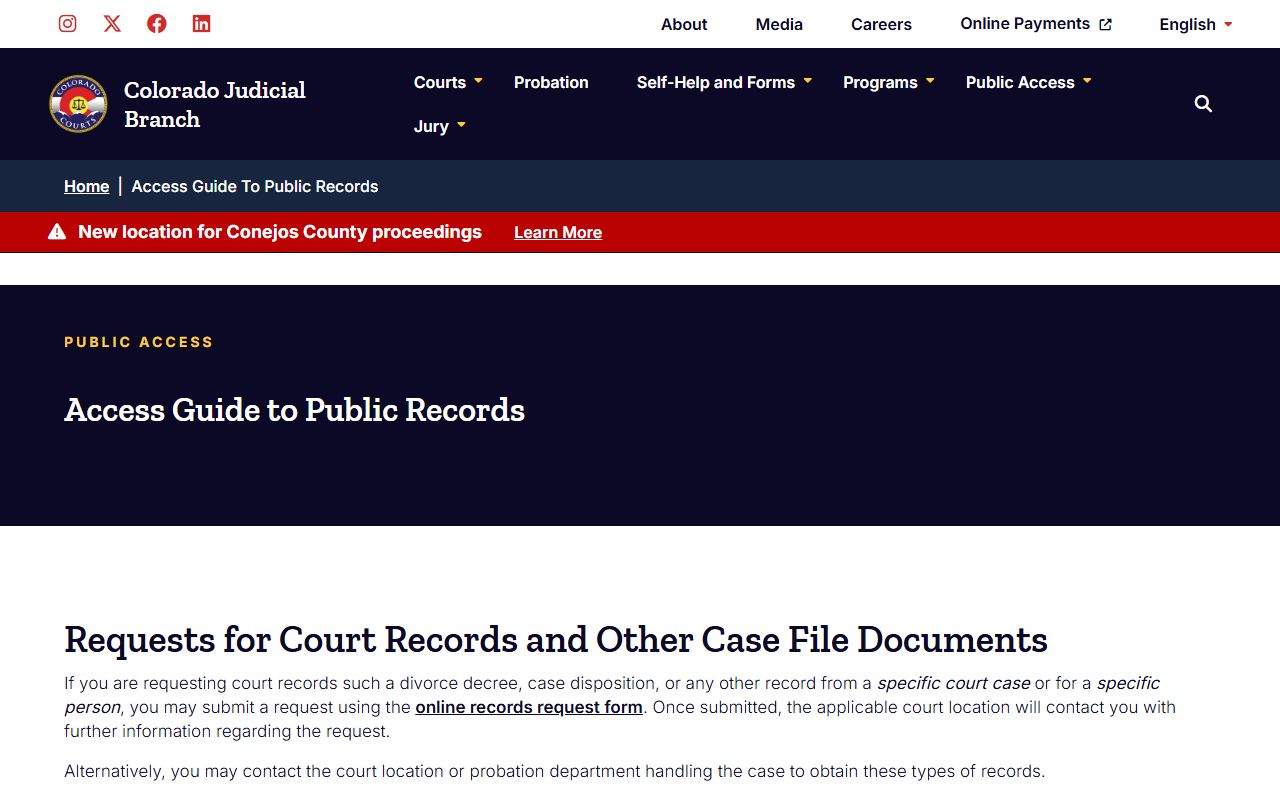
Note: Divorce verifications show less detail than full court records from the District Court Clerk in Colorado.
How to Search Divorce Records Online in Colorado
Colorado offers several ways to look up divorce records. The statewide docket search is a free tool from the Colorado Judicial Branch. You can search by party name, case number, or attorney. The system covers domestic relations cases from District Courts across all 64 counties. No registration is required to search dockets. This is the fastest way to find basic case information from home.
CoCourts.com is a commercial service that provides more detailed access to Colorado court records. This system was created as an initiative of the Colorado Judicial Branch. You can search by name and view registers of action for divorce cases. Each search costs $10 or less. The site shows case status, parties, charges, dispositions, and scheduled events. It does not provide document images. For copies of actual documents, you must contact the court directly.
To search divorce records effectively, you should have the following information ready:
- Full name of at least one spouse
- Approximate date range of the divorce filing
- County where the case was filed
You can also search in person at any District Court Clerk office. Go to the county where the divorce was filed. Staff can help you locate records and make copies. Most clerks charge $0.25 per page for copies. Certified copies cost $20 per document. For divorce verifications, you can use VitalChek online. Additional service fees apply on top of the state fee.
Types of Divorce Records Available in Colorado
Colorado divorce records include several types of documents. The divorce decree is the final court order that ends a marriage. A judge signs this document after the case is complete. The decree states the marriage is over and covers parental responsibilities, support, and property division. This is the most complete divorce record you can obtain. It comes from the Clerk of District Court in the county where the case was heard.
The divorce verification is a shorter document from the Colorado Department of Public Health and Environment. A verification proves that a divorce took place but does not show the terms of the settlement. Many people need this document for changing their name, getting remarried, or updating other legal papers. You can request a verification from the state vital records office or through VitalChek.
Under C.R.S. § 14-10-120, the Clerk of District Court must give notice of the divorce decree entry to the state registrar of vital statistics. This creates the link between court records and vital statistics records. The clerk forwards a report of each dissolution to CDPHE.
Divorce case files may also contain motions, responses, and other papers filed during the proceedings. These show the full history of the case. You can get copies of any document in a case file from the District Court Clerk. A $3 tax is levied on each dissolution filing under C.R.S. § 25-2-107.
Colorado Divorce Laws and Requirements
Colorado law establishes specific rules for obtaining a divorce. These laws affect how long the process takes and what records are created. The state legislature has set requirements for residency, grounds, waiting periods, and property matters. You must follow these rules to file for divorce in Colorado.
Under C.R.S. § 14-10-106, at least one spouse must have lived in Colorado for 91 days before filing. This is the residency requirement. Children must have lived in Colorado for 182 days. You file in the county where you or your spouse resides. The court must also find that the marriage is irretrievably broken before granting a divorce.
There is a mandatory 91-day waiting period after filing before the court can enter a divorce decree. This waiting period applies to all divorce cases in Colorado. The court may issue temporary orders during this time for parental responsibilities, support, or use of property.
Colorado is a no-fault divorce state. Under C.R.S. § 14-10-110, if both parties state under oath that the marriage is irretrievably broken, the court presumes this fact. The court does not require proof of fault such as adultery or abandonment. This makes the divorce process simpler than in some other states.
Chief Justice Directive 05-01 governs public access to court records in Colorado. This directive establishes that court records are generally open for inspection. However, some records may be limited under C.R.C.P. 121 § 1-5 if privacy interests outweigh public interests.
Divorce Record Fees in Colorado
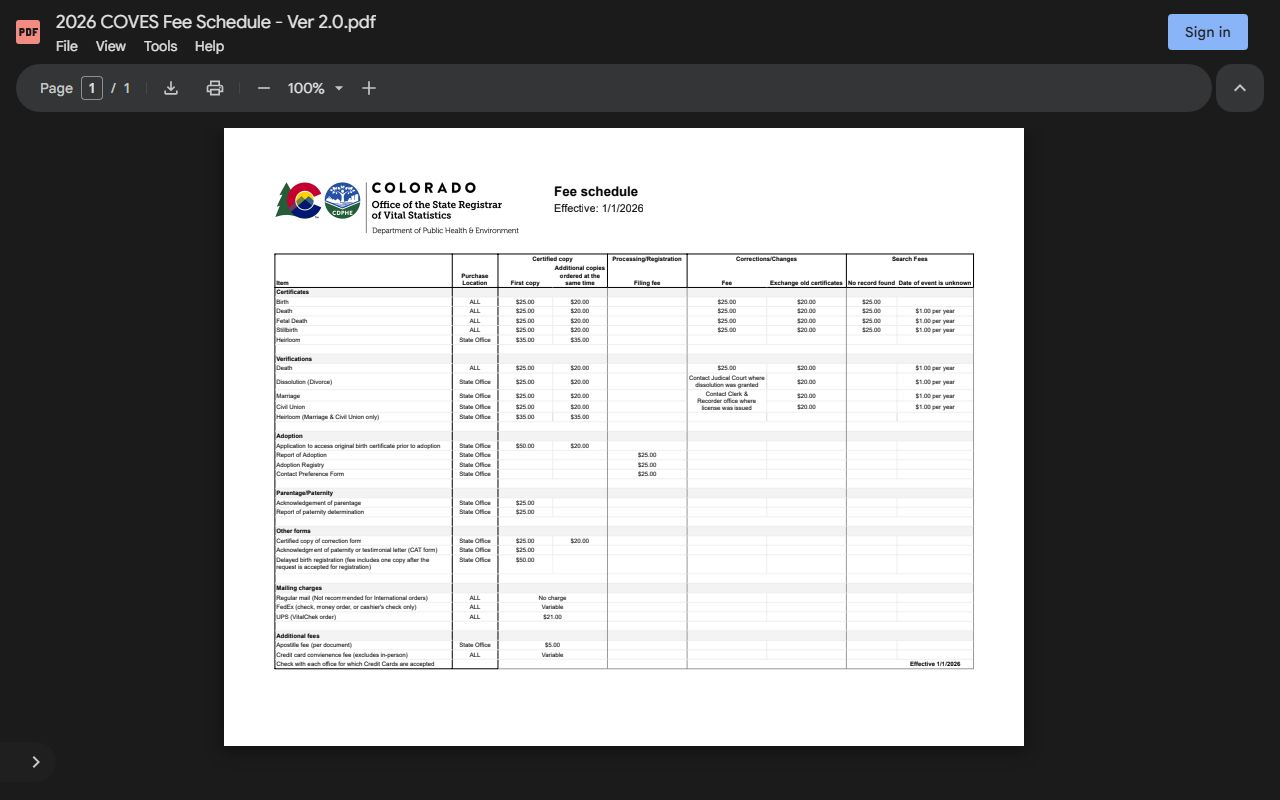
Fees vary based on what you need and where you obtain it. The Colorado Department of Public Health and Environment charges $17 for a divorce index verification. This fee is non-refundable. You must pay by personal check or money order made payable to Vital Records Section. Credit card payments incur a surcharge.
District Courts charge filing fees for divorce cases under C.R.S. § 13-32-101. Filing a petition for divorce, separation, or annulment costs $260. This fee increased on January 1, 2025 per House Bill 2024-1286. Filing a response costs $146. Motions to modify a decree cost $105 if filed more than 60 days after the order. Name restoration is free if filed within 60 days of the decree.
For copies of existing divorce records, the court charges $0.25 per page. Certified copies cost $20 per document. Exemplified copies also cost $20. Name searches cost $5. Research and redaction fees are $30 per hour after the first free hour. Off-site file retrieval costs the actual expense of retrieval.
E-Filing adds a $12 fee per filing for non-attorneys. This is charged by the Colorado Courts E-Filing system. Fee waivers are available for people with low income. You can file a motion to proceed without payment. The judge will review your financial situation and decide if you qualify.
Note: Filing fees and copy fees change periodically. Contact the court or agency to confirm current costs before submitting your request.
How to Get Copies of Colorado Divorce Records
You can obtain copies of divorce records in several ways. For divorce verifications from CDPHE, you have multiple options. You can order by mail using the divorce application form available on the CDPHE website. Send your completed application with ID and payment to 4300 Cherry Creek Drive South, Denver, CO 80246. The office is open by appointment only for in-person visits.
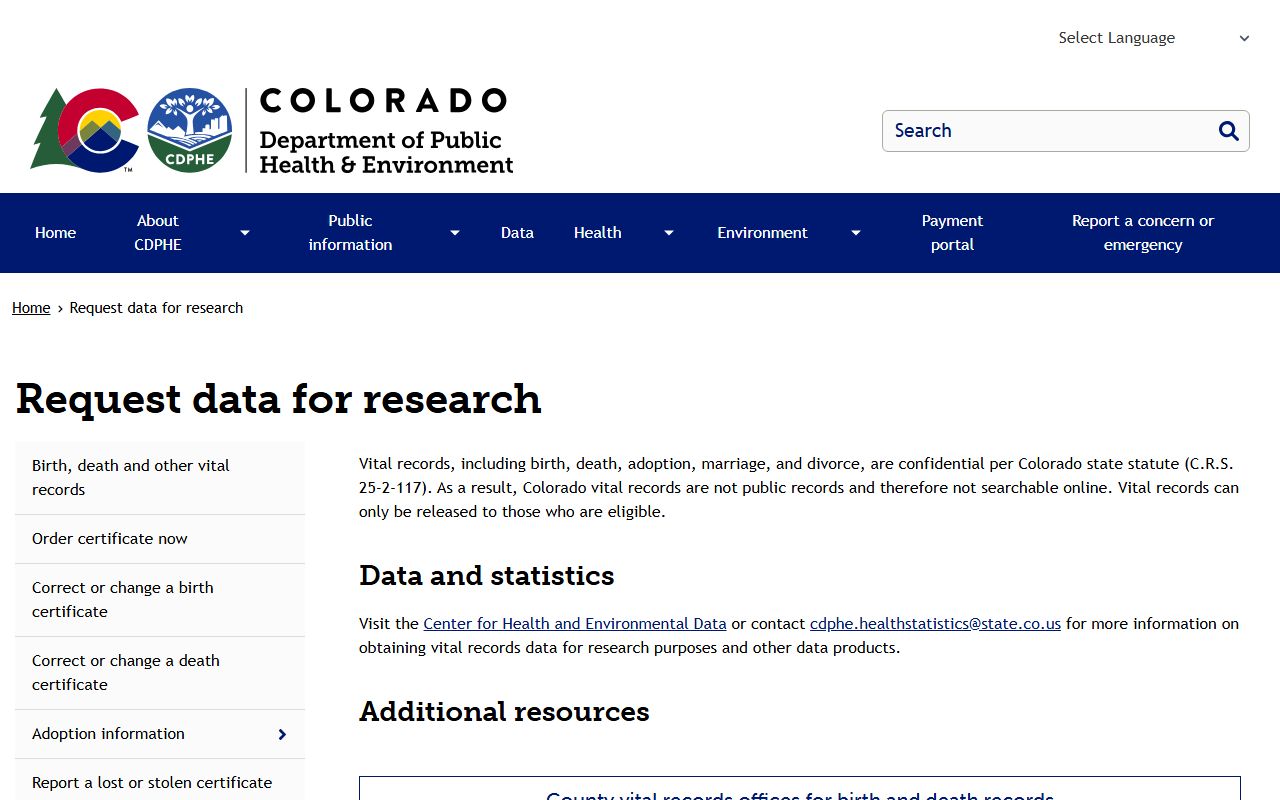
For full divorce decrees and case files, contact the District Court Clerk in the county where the divorce was filed. You can submit a request using the online records request form. The court will respond within three business days unless there are extenuating circumstances. You can also visit the courthouse in person during business hours.
Processing times vary by method. Online records requests to courts are processed within three business days. Mail requests to CDPHE take about 30 business days. Rush processing may be available through VitalChek for an additional fee. E-Filing Opt-In access can take up to two business days for existing cases.
Colorado Courts E-Filing System
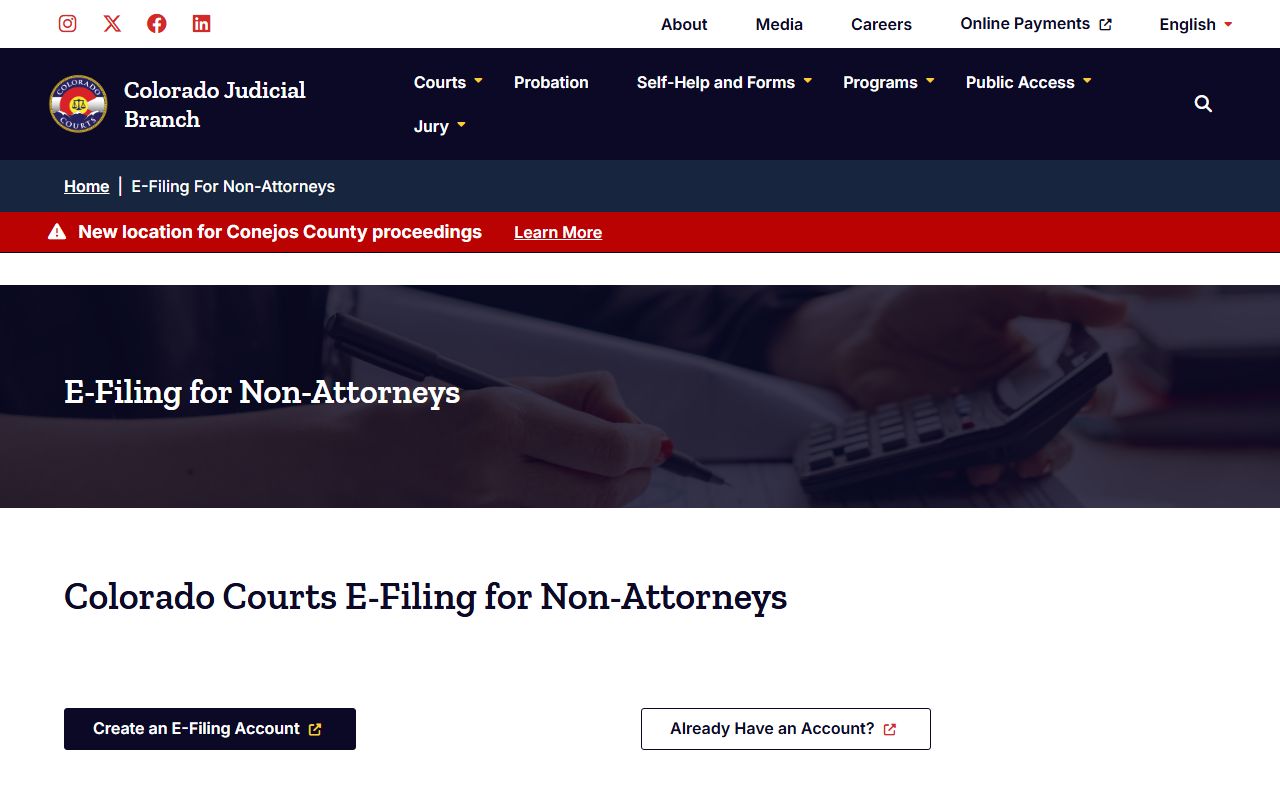
The Colorado Courts E-Filing system allows parties to file documents electronically. Non-attorneys can use this system for domestic relations cases including divorce. You must register for a user ID at the E-Filing registration page. Once registered, you must opt-in to connect your account with your existing case.
After opting in, you can view all documents in your case 24 hours a day. You can file new documents and serve other parties electronically. You may only E-File or E-Serve into your own case. You cannot file for someone else. Technical support is available Monday through Friday from 7:00 a.m. to 6:00 p.m. at 720-625-5800.
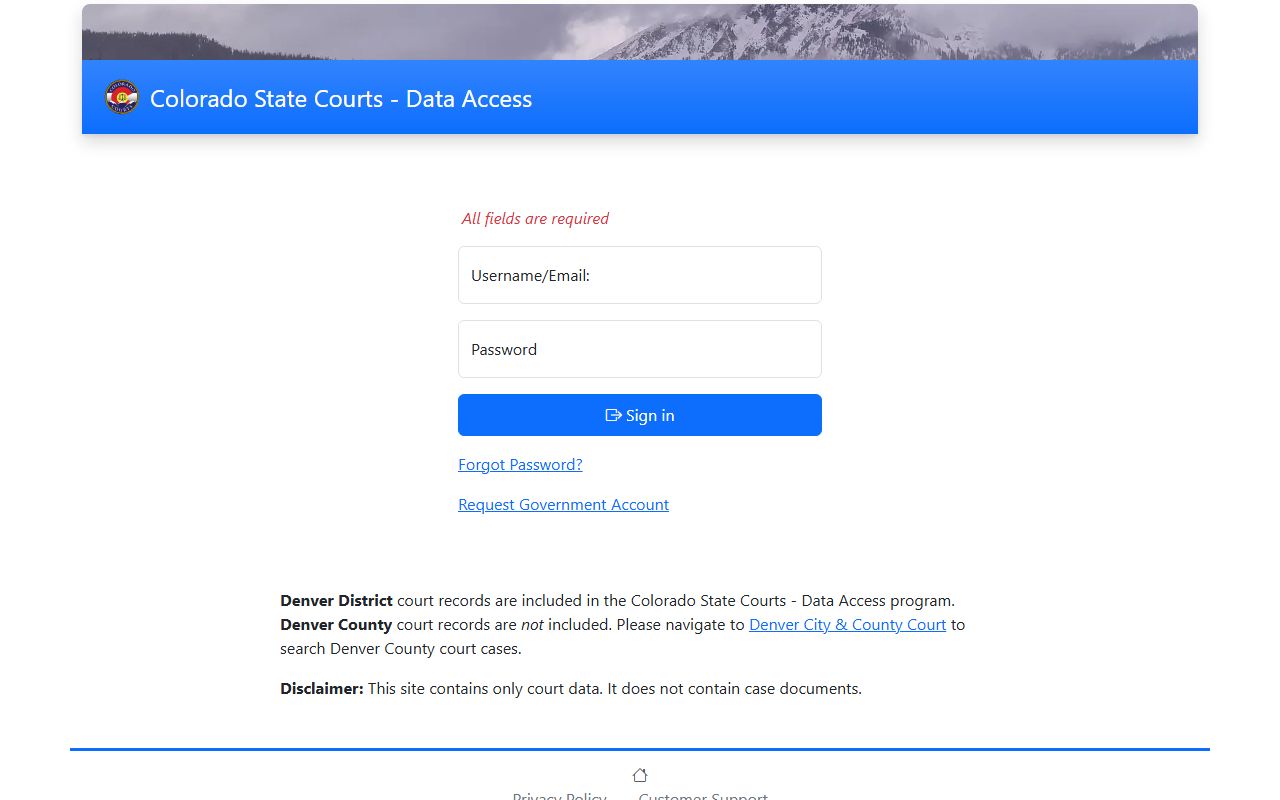
E-Filing fees are $12 per filing for non-attorneys. Viewing case history as a non-party costs $15. This gives you access for 14 days. Viewing documents after gaining access is free. Searching is always free. Credit card fees up to 3% apply for attorneys only.
Legal Help for Divorce in Colorado
The Colorado Judicial Branch provides self-help resources for people handling their own divorce cases. The Divorce and Separation page has forms and instructions. You can find step-by-step guides for getting a divorce or legal separation. The site also explains how to convert a legal separation to a divorce.
Form JDF 1010 is the process guide for divorce and legal separation. Form JDF 1011 is the petition to start a case. Form JDF 1015 is the response to a petition. Form JDF 1018 allows you to request a decree without appearing in court if you qualify. All forms are available on the Colorado Judicial Branch website.
The Colorado State Court Administrator's Office can answer general questions. They are located at 1300 Broadway, Denver, CO 80203. Their phone number is 720-625-5000 or 800-888-0001. For public access questions, email public.access@judicial.state.co.us. For court data requests, email courtdatarequests@judicial.state.co.us.
Are Divorce Records Public in Colorado
Court divorce records are generally public in Colorado under the Colorado Open Records Act. C.R.S. § 24-72-201 declares that all public records shall be open for inspection by any person at reasonable times. This applies to divorce case files maintained by District Courts. You do not need to be a party to the case to view most records.
However, some limits apply to what you can see. C.R.S. § 24-72-204 allows custodians to deny inspection if it would be contrary to state statute. Social security numbers and financial account information are typically redacted. Information about minor children may also be limited. A party can ask the court to seal divorce records under C.R.C.P. 121 § 1-5. The judge must find that harm to privacy outweighs public interest.
Vital statistics records are treated differently. Under C.R.S. § 25-2-117, vital statistics records are confidential. Only applicants with a direct and tangible interest can obtain copies. This includes the parties, their attorneys, and others with a legal interest. Commercial requesters do not qualify.
Note: Court case files at the District Court Clerk are generally open to all. Divorce verifications at CDPHE have restricted access rules.
Browse Colorado Divorce Records by County
Each of the 64 counties in Colorado has a District Court that keeps divorce records. Select a county below to find local contact information and resources for divorce records in that area.
Divorce Records in Major Colorado Cities
Residents of major cities file for divorce at their county District Court. Select a city below to learn about divorce records in that area.