
Finding Denver Dissolution Records
Denver County divorce records are stored at Denver District Court, which sits at 1437 Bannock Street in the heart of the city. This court handles all dissolution cases for Denver residents. Denver operates both District Court and Denver County Court, but only the District Court manages divorce filings. The city and county government merged in 1902, creating a unique system where one entity manages both city and county functions under C.R.S. § 30-11-101.
Denver County Quick Facts
Denver District Court Location and Records
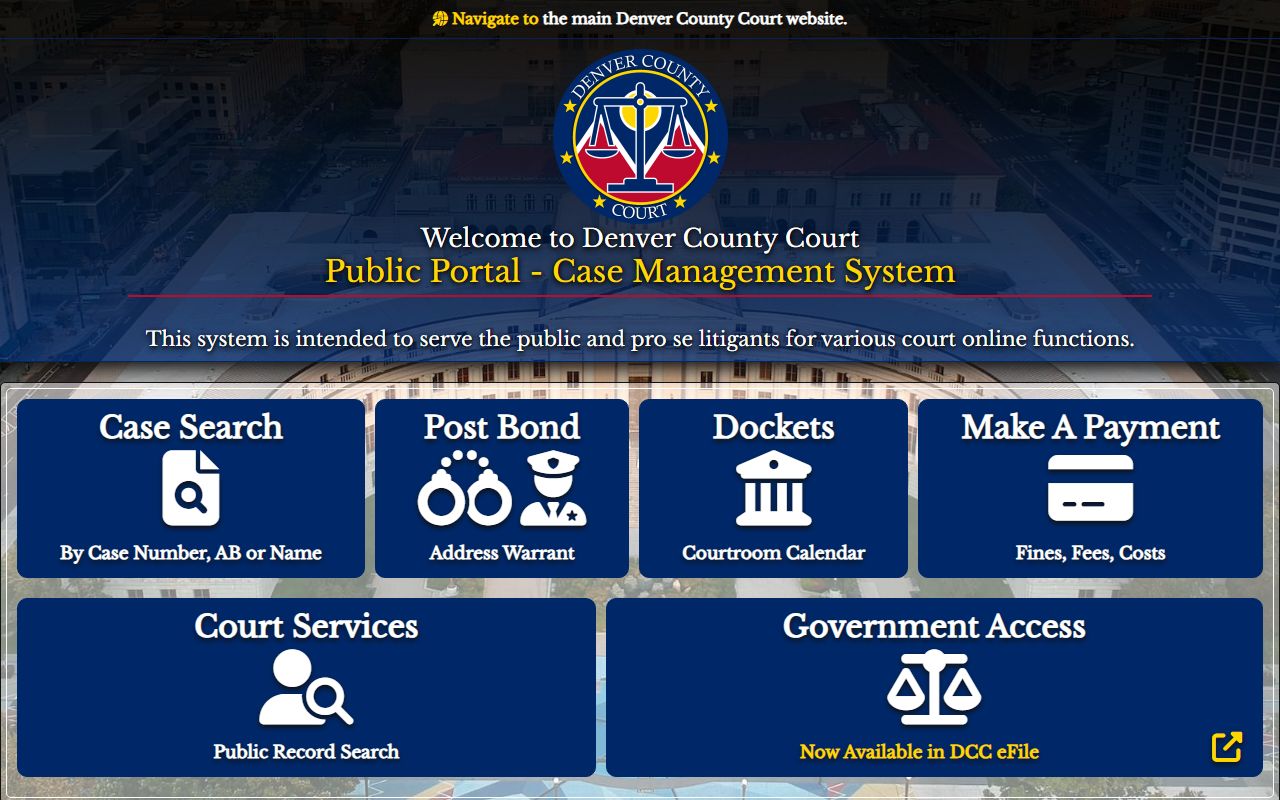
Denver District Court is located at 1437 Bannock Street, Denver, CO 80202. This building houses all divorce records for Denver County. The court serves as the primary keeper of dissolution cases filed within city limits. Clerks at this location manage filings, process motions, and release certified copies of divorce decrees to qualified requesters under C.R.S. § 14-10-120.
The court is part of the 2nd Judicial District. It handles all domestic relations matters. This includes divorce, legal separation, and annulment cases. The clerks can search records by name or case number. Most divorce files from 1997 forward are stored in the ICON case management system. Older records may be archived off-site. Staff can retrieve these files within three business days per court policy.
| Denver District Court |
1437 Bannock Street Denver, CO 80202 Phone: (720) 865-8300 |
|---|---|
| Hours | Monday through Friday, 7:30 AM to 4:30 PM |
| Records Office | Room 300 |
| Denver County Court | Separate from District Court, handles misdemeanors and civil under $25,000, not divorce |
How to Search Denver County Divorce Records
You have several ways to find divorce records in Denver County. Each method works for different needs. The right choice depends on what you want to find and how quickly you need it. Some searches are free. Others charge fees. All methods follow Colorado access rules under Chief Justice Directive 05-01.
The Colorado Judicial Branch offers a free docket search tool. It covers Denver District Court cases. Visit coloradojudicial.gov/dockets to start. You can search by name, case number, or date range. Select "DR" as the case class for divorce matters. This tool shows case status, parties, and scheduled events. It does not show document images. For those, you must contact the court directly or use the online record request form.
To search Denver County divorce records effectively, you will need:
- Full legal names of both spouses
- Approximate year of filing or decree
- Case number if available
Commercial services also offer Denver County divorce record searches. CoCourts.com charges $10 or less per search. It provides register of actions for domestic relations cases. This can save time if you need basic case details fast. For certified copies, you must visit the court in person or submit the online request form. Copies cost $0.25 per page. Certified copies cost $20 per document. The court aims to process requests within three business days.
Note: Denver County Court records are separate from state court records and require direct contact with that court.
Denver County Divorce Filing Costs
Denver County follows state fee schedules for all divorce actions. These fees are set by the Colorado Legislature. They apply statewide. Denver District Court collects these fees when you file. Some fees can be waived if you qualify under C.R.S. § 13-32-104(1)(a). Ask the clerk about fee waiver forms if you have low income.
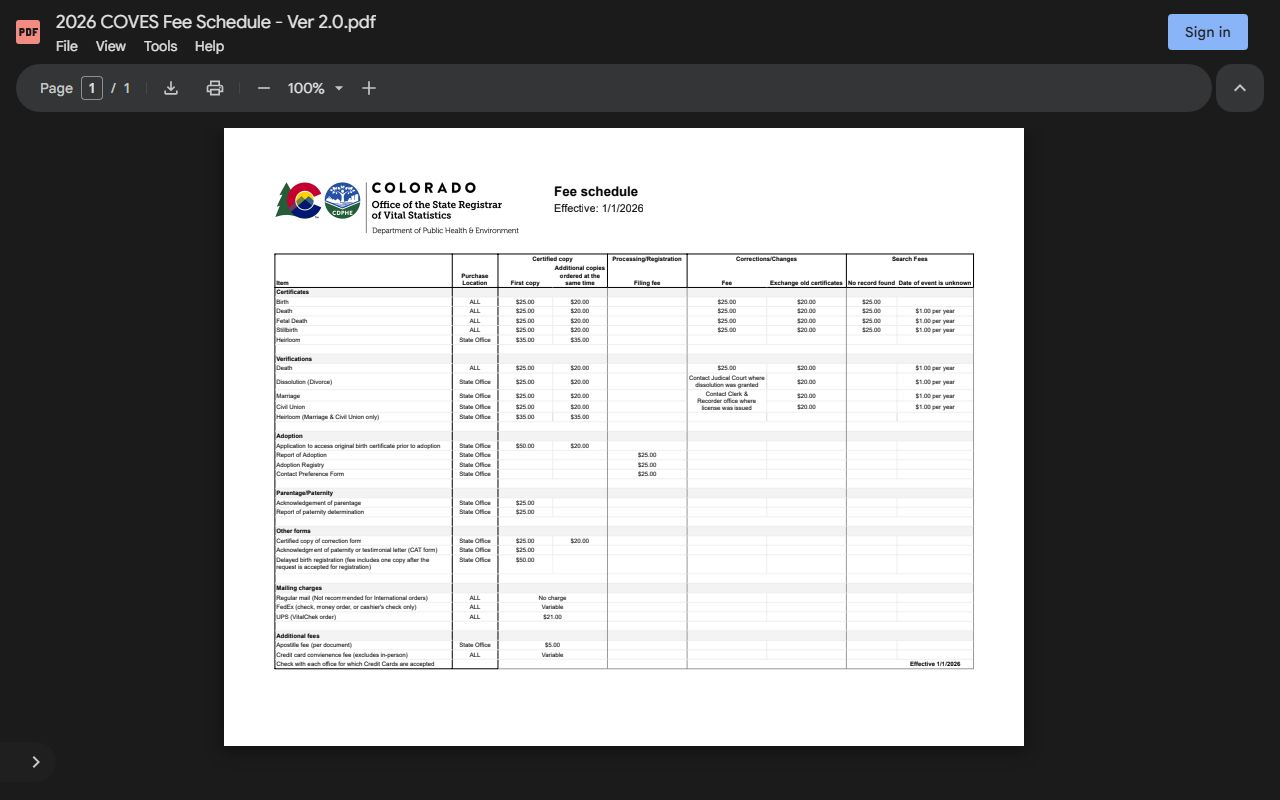
The main fees for Denver County divorce cases include:
- File a divorce petition: $260.00
- File a response to petition: $146.00
- Motion to modify decree after 60 days: $105.00
- Certified copy of divorce decree: $20.00
- Plain copy per page: $0.25
E-filing adds a $12 fee per transaction. This applies to attorneys and self-represented parties who use the Colorado Courts E-Filing system. The fee pays for the electronic service provider. Additional costs may apply for service of process. Private process servers charge varying rates. The Denver Sheriff charges fees for serving papers. These costs are separate from court filing fees. Check with the clerk for current rates before you file.
Denver County Residency Requirements
Colorado law requires residency before you can file for divorce in Denver County. C.R.S. § 14-10-106 states that one spouse must live in Colorado for 91 days. This is about three months. You must prove residency when you file. A driver's license, utility bill, or lease can serve as proof. The court needs this to have jurisdiction over your case.
Children have different residency rules. They must live in Colorado for 182 days before the court can rule on custody. This is six months. This rule comes from the Uniform Child Custody Jurisdiction and Enforcement Act. If your children have not lived in Colorado long enough, the court may delay custody decisions. The divorce can still proceed for the adults. Property and debt issues can also be resolved during this time.
Denver County residents file at the Denver District Court. This is true even if you live in a neighborhood like Cherry Creek, Capitol Hill, or Highland. All Denver city neighborhoods fall under this one court. You cannot file in another county just because it is closer. You must file where you or your spouse resides. If both parties moved from Colorado, you may lose the right to file here. Check with a lawyer if you have questions about jurisdiction.
Denver County Divorce Waiting Period
Colorado imposes a waiting period on all divorce cases. C.R.S. § 14-10-106 requires 91 days to pass before a court can grant a decree. This clock starts when the court obtains jurisdiction over both parties. If both spouses file jointly, the period starts on the filing date. If one spouse files alone, the period starts when the other spouse is served or responds.
This waiting period serves as a cooling-off time. It gives spouses a chance to reconcile. It also allows time for negotiation. Many couples use this time to reach settlement agreements. Settled cases move faster once the 91 days pass. The court can enter a decree by affidavit in some cases. This means no hearing is needed. Ask the clerk about form JDF 1018 if you want to request this option.
Note: The 91-day waiting period is a minimum. Complex cases often take longer.
Types of Denver County Divorce Records Available
Denver County maintains several kinds of divorce records. Each serves a different purpose. The divorce decree is the most important document. It ends the marriage. It also spells out all terms. This includes property division, support, and custody. The decree is a public record. Anyone can request a copy from the clerk under Colorado open records laws.
Case files contain all papers filed during the divorce. This includes the petition, response, financial disclosures, and settlement agreements. These files are public but may contain redacted information. Social security numbers and financial account numbers are removed from public copies. The full file is available to parties and their attorneys. Others may need a court order to see unredacted versions under C.R.S. § 24-72-204.
The Colorado Department of Public Health also tracks divorces. They create verification records. These are not the same as court decrees. CDPHE can confirm a divorce happened. They charge $17 for this service. They cannot provide certified copies of the actual decree. For that, you must contact Denver District Court directly. Call CDPHE at 303-692-2200 for verification requests.
Legal Help for Divorce in Denver County
Several groups offer help with divorce cases in Denver. Some provide free services. Others charge sliding-scale fees. These resources can help you understand your rights. They can also help with paperwork and court procedures. Denver has more legal aid options than most Colorado counties due to its large population.
Colorado Legal Services operates a Denver office. They serve low-income residents. Priority goes to cases involving domestic violence or children. Call (303) 837-1321 to apply. The Denver Bar Association runs a lawyer referral service. Call (303) 860-1115. They match you with family law attorneys. The first consultation costs $30 for 30 minutes. This is a good way to get basic advice without a large fee.
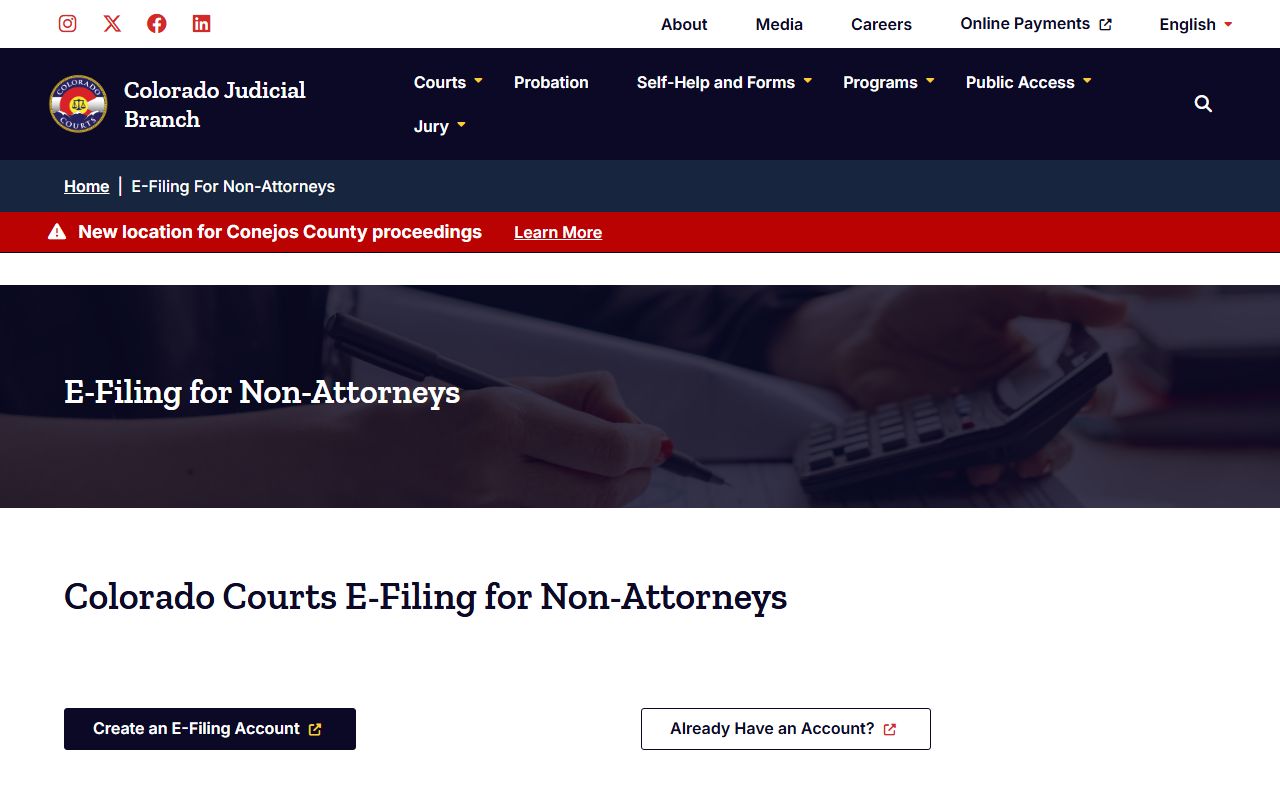
The Denver District Court also has a self-help center. Staff cannot give legal advice. They can help you find the right forms. They can explain filing procedures. The center is open during court hours. Forms are also online at coloradojudicial.gov. E-filing is available for self-represented parties in domestic relations cases. Create an account at the Colorado Courts E-Filing portal.
Areas in Denver County
Denver is a consolidated city and county. It contains many neighborhoods. All fall under the same court system. Whether you live in LoDo, Wash Park, or Montbello, you file at the same Denver District Court. The clerk serves all Denver neighborhoods equally.
Major Denver neighborhoods include Capitol Hill, Cherry Creek, Highland, Five Points, LoDo, RiNo, Stapleton, Wash Park, Congress Park, and Park Hill. All residents file divorce cases at the Denver District Court on Bannock Street.
Nearby Counties
These counties border Denver. If you live near the edge of the city, make sure you file in the correct county. You must file where you or your spouse lives.